

My First Culture Shock in a South Korean Apartment
One of the biggest surprises many foreigners experience when visiting a South Korean apartment for the first time happens during winter. You step inside after walking through freezing streets, take off your shoes, and suddenly notice something unexpected—the floor feels wonderfully warm.
“Why is the floor heated?”
That simple question has amazed countless travelers, exchange students, and expats. In many Western countries, people expect radiators, fireplaces, or forced-air heating systems. But in Korea, warmth rises gently from beneath your feet instead.
This unique heating system is called Ondol, and it has been an essential part of Korean life for centuries. Even in today’s modern high-rise apartments, the tradition continues in a much more advanced form.
For many visitors, this cozy first impression becomes one of their favorite memories of living in Korea. Once you’ve experienced warm floors on a cold winter morning, it’s surprisingly difficult to go back to ordinary heating systems.
What Is Ondol? Korea’s Traditional Heating System

Ondol is Korea’s traditional underfloor heating system and one of the country’s oldest architectural innovations. The word literally means “warm stone.”
Hundreds of years ago, Korean homes were designed with a fireplace located outside the main living space. When families cooked meals or burned firewood, the hot smoke traveled through stone channels underneath the floor before leaving through a chimney. As the stones absorbed the heat, they slowly warmed the entire room from the ground up.
Although today’s apartments no longer use smoke or firewood, the basic idea remains exactly the same.
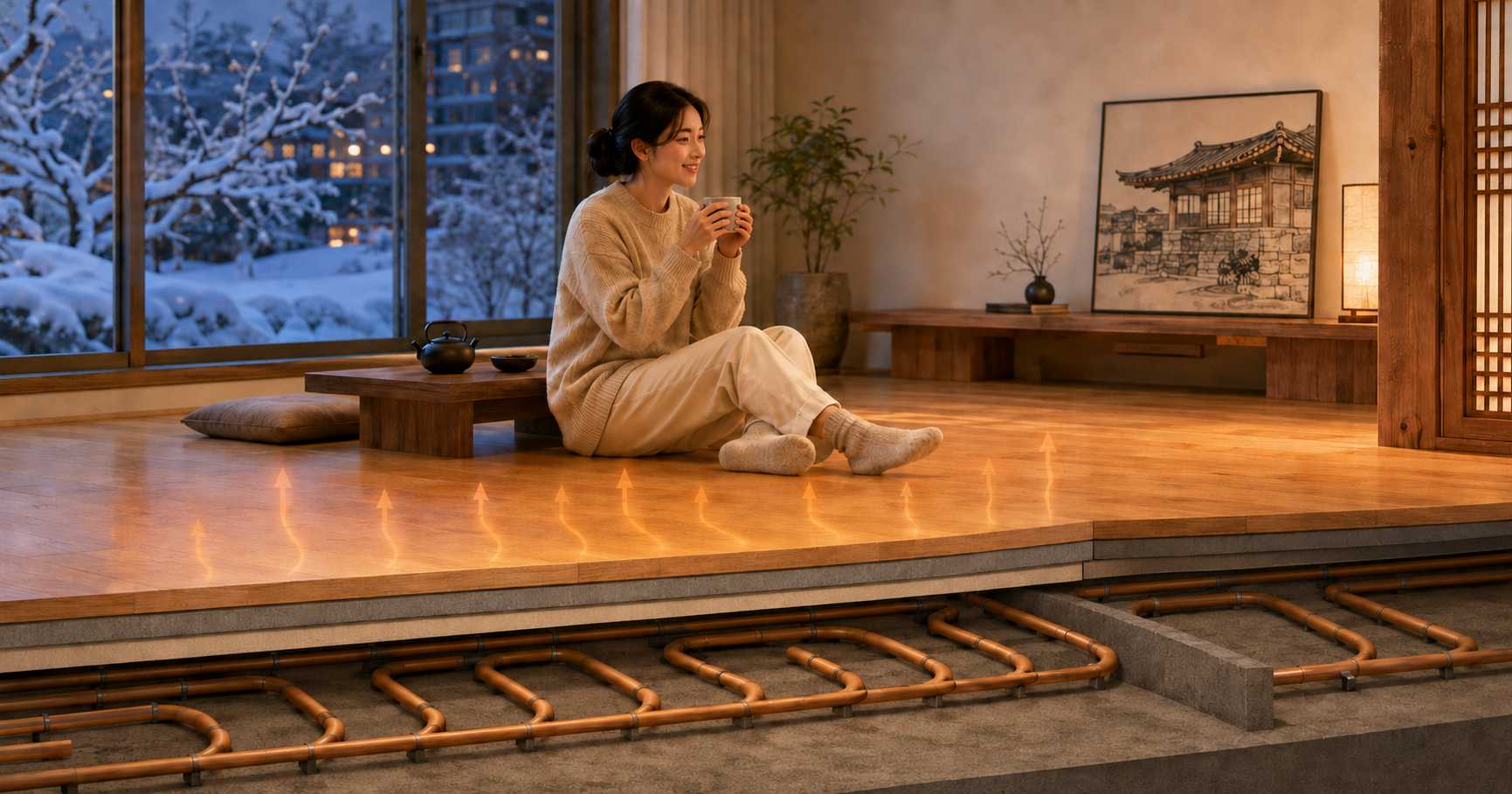
| How modern Korean apartments stay warm: A mesh of hydronic heating pipes covers the entire floor area before concrete is poured. |
Modern South Korean apartments use hydronic underfloor heating, where hot water flows through pipes embedded beneath the floor. A gas boiler heats the water, which circulates through the apartment and gently warms every room.
For foreigners, the biggest comparison is with the familiar radiator system.
Radiators heat the air around them. As the warm air rises, cooler air falls, creating continuous air circulation. While effective, this often makes indoor air feel dry and creates noticeable hot and cold spots throughout the room.
Ondol works differently. Instead of heating the air first, it heats the floor itself. The warmth then rises naturally, creating an even and comfortable indoor temperature. Because the entire floor becomes a gentle heat source, there are fewer temperature differences within the room.
This simple yet brilliant idea explains why Korea has relied on underfloor heating for over a thousand years.
Why Foreigners Fall in Love with Modern Korean Apartments
After spending just one winter in Korea, many foreigners say they miss Ondol more than anything else when they return home.
One of the biggest advantages is the absence of dry air. Unlike forced-air heaters or radiators that constantly circulate warm air, underfloor heating produces gentle radiant heat. The room feels comfortable without a constant stream of hot air blowing toward you. Many people notice that their skin, throat, and eyes feel less dry during winter.
Another fascinating aspect is how Ondol has shaped Korean lifestyle.
In many Western homes, furniture is designed around sofas and chairs because the floor is usually cold. In Korea, however, the warm floor naturally becomes part of the living space. It’s common to see families sitting directly on the floor while watching television, eating snacks, reading books, or chatting together. Some people even lean against the sofa instead of sitting on it because the heated floor is simply more comfortable.
For newcomers, this floor-based lifestyle often feels unusual at first. But after a few weeks, many discover that relaxing on a warm floor is incredibly cozy.
Energy efficiency is another major benefit.
Because concrete floors store heat extremely well, they continue releasing warmth long after the boiler stops running. This thermal storage helps maintain a stable indoor temperature while reducing frequent heating cycles. Instead of repeatedly blasting hot air into the room, the entire floor slowly releases stored heat over time.
Of course, every heating system has trade-offs. Ondol usually takes longer to warm up than forced-air heating because the floor itself must first absorb heat. However, once the floor is warm, the temperature remains remarkably stable and comfortable.
Perhaps the greatest luxury of all is something very simple—warm feet.
Anyone who has walked barefoot across a heated Korean apartment on a freezing January morning understands why so many residents love this system. Warm feet make your entire body feel warmer, often allowing people to stay comfortable even when the room temperature is set slightly lower.
It’s a small everyday comfort that quickly becomes something you never want to live without.

How to Use a Korean Apartment Boiler Control Panel
One challenge many foreigners face after moving into a Korean apartment is the wall-mounted boiler control panel. Most buttons are labeled only in Korean, which can make adjusting the heating confusing at first.
Fortunately, the most common buttons are easy to understand.
실내 (Room) – Controls the indoor room temperature.
온돌 (Floor Heating) – Controls the floor heating temperature directly.
온수 (Hot Water) – Adjusts the temperature of hot water used for showers and sinks.
외출 (Vacation Mode) – Often misunderstood as turning the heating completely off. In reality, this mode keeps the apartment at a low temperature to prevent frozen pipes while saving energy when you’re away.
Learning these four buttons is usually enough to operate most apartment heating systems confidently.
More Than Heating—A Warm Piece of Korean Culture
Ondol is much more than a practical way to heat a home.
It reflects Korea’s long history, architectural ingenuity, and everyday lifestyle. The warm floors encourage families to gather together, create cozy living spaces, and make winter far more comfortable than many visitors expect.
For countless foreigners, the first warm step onto a Korean apartment floor becomes an unforgettable culture shock. Before long, it transforms into one of the things they miss most after leaving Korea.
Sometimes, understanding a country begins not by looking around—but simply by feeling the warmth beneath your feet.