
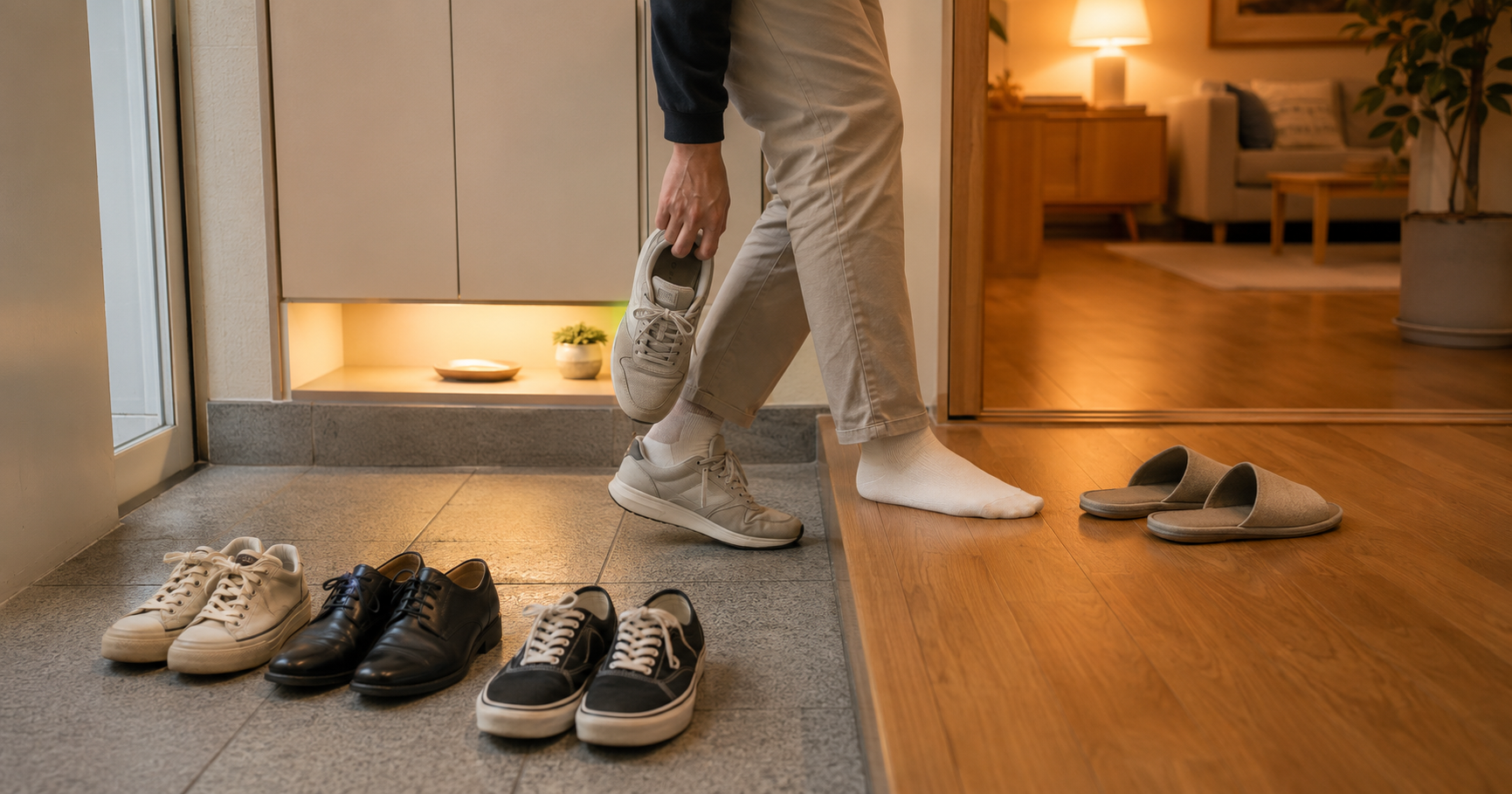

If you have ever watched a K-drama, a Korean reality show, or visited a Korean friend’s house, you have likely noticed a recurring ritual. The moment characters step through the front door, they pause, slip off their shoes, and step onto the floor in their socks or barefoot. To many Westerners, where walking into a house with shoes on is either normal or heavily dependent on personal preference, this strict rule can feel both fascinating and a little intimidating.
For Koreans, entering a home without shoes is not just a polite request—it is an absolute, non-negotiable rule rooted in thousands of years of history, health, and a unique way of experiencing domestic space. Understanding this practice is one of the fastest ways to truly appreciate Korean lifestyle and “K-culture.”
The Historical Secret Under the Floor: Ondol
To understand why Koreans leave their shoes at the door, you have to look down at the floor itself. The foundation of traditional Korean housing revolves around a unique architectural marvel known as Ondol (heated flooring).
Because the floor is the warmest part of the house, the entire Korean domestic lifestyle naturally developed directly on the ground. Koreans traditionally do not sit on high chairs or sleep on elevated beds. Instead, they sit on floor cushions (Bangseok), eat at low communal tables, and sleep on thick, comfortable quilted mattresses called Yo spread directly across the heated floorboards.
In the West, traditional heating systems relied on fireplaces or radiators that warmed the air. In contrast, Ondol warms the entire room from the ground up. In traditional times, smoke and heat from the kitchen hearth were channeled through a network of stone flues underneath the living room floor before exiting through a chimney. Today, this has evolved into modern, highly efficient underfloor hot-water pipes found in every contemporary apartment building across Seoul.
📺 K-Drama Connection: Have you ever wondered why your favorite K-drama leads always sleep or eat on the floor even when they have a luxury sofa right behind them? Now you know the secret! The floor is literally the coziest, warmest spot in the entire apartment.
The Anatomy of a Korean Entrance: The Hyeongwan
Architecturally, every single house and apartment in Korea is physically designed to accommodate this lifestyle. When you open the front door, you do not step immediately into the living room. Instead, you enter a small, dedicated sunken entryway called the Hyeongwan (현관).
The Jeongwan acts as a physical and symbolic psychological boundary between the chaotic, dusty outside world and the pristine sanctuary of the home. It is typically built one step lower than the rest of the apartment floor and features a clean, durable tile or stone surface. This is where all outdoor shoes are neatly lined up or tucked away into massive, floor-to-ceiling shoe cabinets (Sinbaljang).
Stepping out of your shoes in the Jeongwan and stepping up onto the elevated wooden or laminated floorboards is the ultimate act of entering a private, clean sanctuary.
Cleanliness, Health, and Psychological Comfort
From a purely practical standpoint, the no-shoes rule keeps the house exceptionally clean. When you think about what outdoor shoes encounter—city street dust, public restroom floors, mud, and bacteria—bringing those elements into a space where children crawl and people sleep directly on the floor is unthinkable in Korean culture.
Furthermore, it offers immense psychological comfort. Taking off your shoes is the physical representation of shedding the stress, professional burdens, and armor of the outside world. It signals that you are safe, comfortable, and truly “at home.”
A Quick Etiquette Guide for Western Visitors
- Never step on the main floor with your shoes on: Even a single accidental step can cause genuine distress to a Korean host. Always step out of your shoes while keeping your feet strictly inside the sunken Jeongwan zone.
- Mind your socks: Always ensure you are wearing clean, presentable socks with no holes when visiting someone’s home. Being completely barefoot can occasionally be seen as slightly impolite depending on how formal the gathering is.
- Embrace the indoor slippers: Many Korean homes will provide a pair of soft, cozy indoor slippers right at the edge of the step. Slip these on to keep your feet warm!
- The Bathroom Plot Twist: When entering a Korean bathroom, you will almost always find a dedicated pair of rubber, waterproof slippers inside. Swap your indoor house slippers for the bathroom slippers before entering, and swap them back when you leave. Never wear the bathroom slippers back out into the living room!
Conclusion: The Ultimate K-Culture Experience
The Korean no-shoes policy is far more than a simple household habit—it is a beautiful reflection of how Korean culture values cleanliness, architectural innovation through Ondol, and mutual respect within a shared living space. By understanding and respecting this simple rule, you aren’t just keeping a floor clean; you are actively participating in a rich, comforting cultural tradition that has defined Korean life for centuries.